2026-09-10 ·
Common Trip Hazards from Settling Concrete in Frisco Neighborhoods
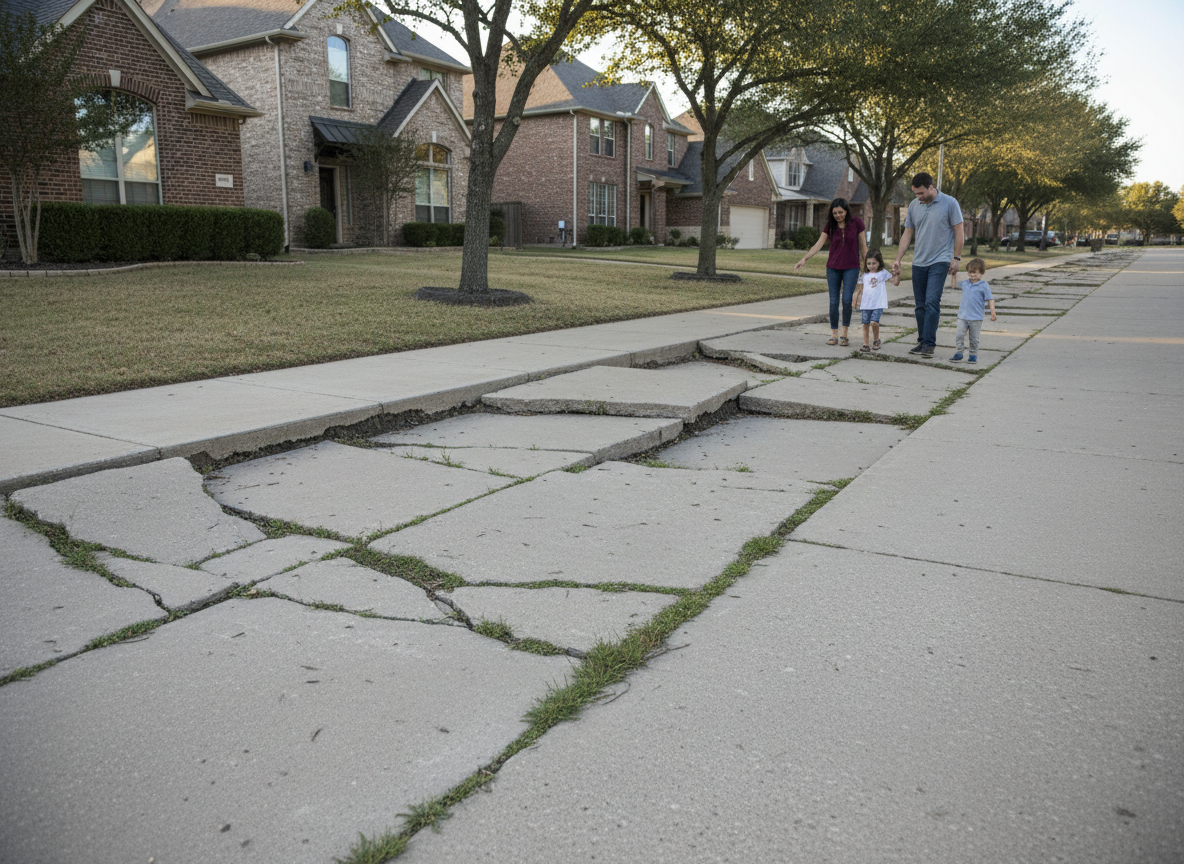
Settling concrete produces trip hazards with height differences of ½ inch or more on sidewalks, driveways, and patios throughout Frisco neighborhoods. These offsets develop when the clay-rich soils of Collin County shift under repeated wet-dry cycles common in the humid subtropical climate. Homeowners notice the changes most after heavy summer rains or during extended hot periods that dry the ground.
Driveway Offsets in Stonebriar and Legacy West
Driveways in Stonebriar and Legacy West often settle along the edges where builders placed fill dirt decades ago. A ¾-inch drop at the garage apron or a raised lip near the street creates a clear stumble point for residents stepping out of vehicles. The hot summers accelerate soil shrinkage beneath the slabs while winter moisture from nearby Plano and McKinney infiltrates joints. These conditions turn small cracks into larger separations within a few seasons. Residents walking from parked cars to front doors encounter the uneven surface daily, especially on older sections of Legacy West built before stricter compaction standards.
Sidewalk Hazards Near Frisco Commons Park and Toyota Stadium
Sidewalks around Frisco Commons Park and Toyota Stadium show repeated lifting at expansion joints after heavy Texas rains. A 1-inch upward shift on one slab and a matching drop on the next produces a trip edge that catches toes during evening walks. The region's clay soils expand when saturated then contract during dry spells, stressing the 4-inch slabs common in these public corridors. Pedestrians heading to events at The Star in Frisco or families using park paths face these offsets most often near tree roots that further dry the soil. Fixing Uneven Concrete After Heavy Texas Rains explains the seasonal pattern in more detail.
Patio and Porch Drops in Downtown Frisco
Patios and porches in Downtown Frisco frequently develop ½- to 1-inch drops along the house foundation where irrigation overspray keeps soil moist on one side only. This uneven moisture pulls slabs downward on the wetter edge while the drier side stays stable. The result is a sloped surface that collects water and creates a lip residents step over when moving from the house to outdoor seating areas. Older homes in the neighborhood, many built in the 1990s and early 2000s, show these changes more clearly because original subgrade preparation varied. How to Level Concrete Around Your Frisco Home Foundation covers similar foundation-adjacent issues.
Soil and Climate Factors Across Collin County
Collin County soils contain high percentages of expansive clay that respond quickly to the area's humid subtropical pattern of hot summers and periodic downpours. When temperatures exceed 95 degrees for weeks, surface moisture evaporates rapidly and the clay shrinks, allowing slabs to settle. Subsequent rains from storms moving through McKinney or Allen rehydrate the soil and push sections upward at different rates. This cycle repeats yearly and explains why trip hazards appear first at driveway seams and sidewalk joints rather than in the middle of large pours. The same pattern affects nearby Allen properties but shows up sooner in Frisco because of faster development on variable fill.
Practical Steps for Identifying Hazards
Walk each slab edge during daylight and note any height change that catches a shoe sole or casts a visible shadow. Measure the offset with a straight edge and ruler; differences of ½ inch or greater warrant attention before they worsen. Check areas near downspouts, irrigation heads, and mature trees first because these spots experience the most moisture fluctuation. Record locations in Stonebriar, Legacy West, or Downtown Frisco so repairs can address multiple spots in one visit. concrete leveling restores a flush surface without removing the existing concrete.