2026-09-10 ·
Preparing Concrete Surfaces for Winter Freeze Thaw Cycles in Collin County
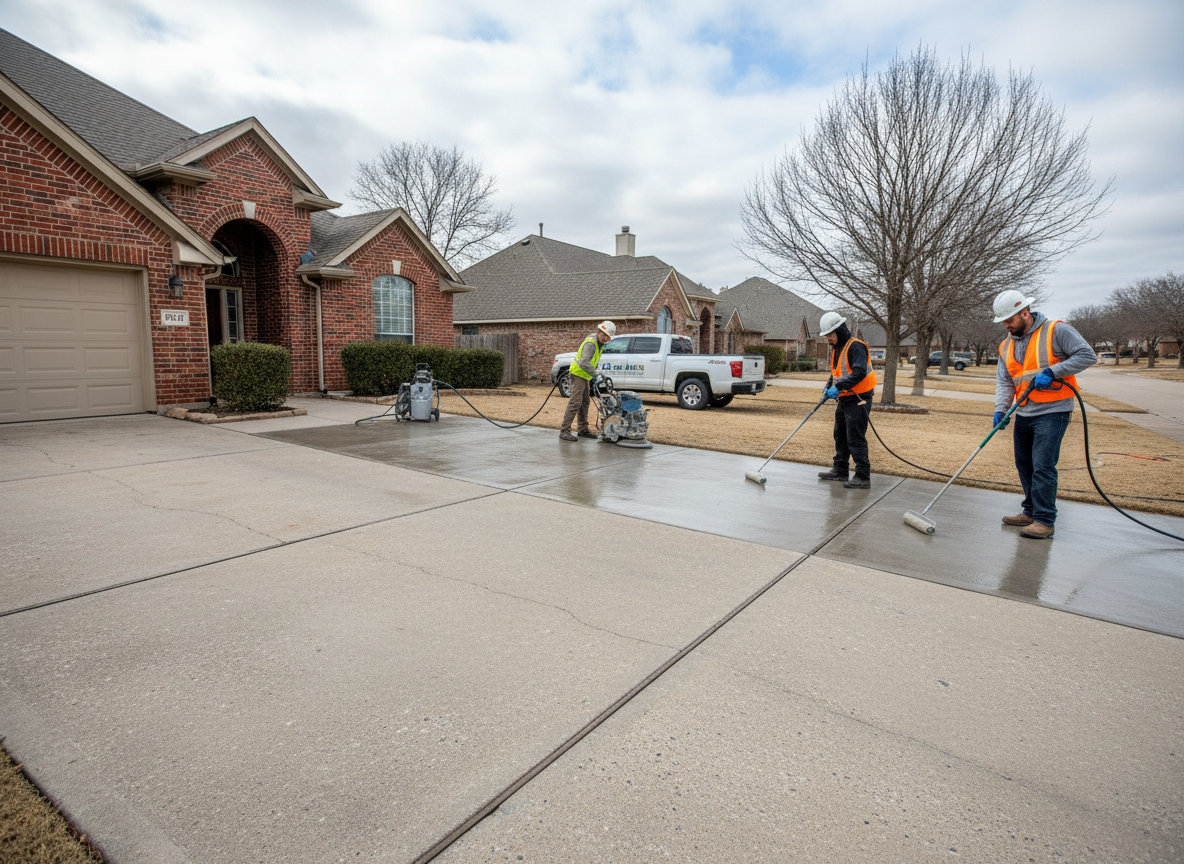
In Collin County, preparing concrete surfaces for winter freeze-thaw cycles begins with improving drainage and sealing visible cracks by mid-November before nighttime lows drop below 32°F. Frisco's humid subtropical climate brings hot summers that dry and shrink clay-heavy soils, then winter freezes that expand moisture trapped beneath slabs, lifting edges in places like Downtown Frisco and Stonebriar. Homeowners who address standing water and joint gaps early reduce heaving risks on driveways and sidewalks that settled during summer storms.
How Collin County Soils React to Freeze-Thaw Cycles
Frisco sits on expansive clay soils common across Collin County that absorb summer rains then contract during dry spells, leaving voids under concrete. When winter temperatures swing from above freezing daytime highs to freezing nights, water in those voids expands and pushes slabs upward, especially around The Star and Legacy West where newer homes sit on compacted fill. This cycle repeats several times each winter, widening cracks that started from summer soil movement. Checking for low spots that pond water after rain helps identify areas needing attention before the ground hardens.
Drainage Fixes That Limit Winter Heaving
Poor drainage accelerates freeze-thaw damage because water sits against slab edges and seeps under joints. In neighborhoods like Stonebriar, many driveways slope toward the house or collect runoff from adjacent lawns. Adding or extending downspout extensions and regrading soil to slope away from concrete edges at least 6 inches over 10 feet reduces moisture that freezes and expands. Clearing debris from expansion joints also prevents water from pooling in those gaps where it can freeze and widen separations over multiple winters.
Sealing and Maintenance Steps Before First Freeze
Sealing cracks with a flexible concrete caulk rated for exterior use stops water entry that fuels heaving during freezes. Walk slabs in late fall and mark any gaps wider than 1/8 inch, then clean them with a wire brush before applying sealant on days above 50°F. For larger settled areas, concrete leveling restores slope so water runs off instead of collecting. Homeowners in Allen and McKinney often combine this with sealing to handle the same clay and freeze patterns seen in Frisco.
When to Consider Leveling Before Winter
Settled sections that already show trip hazards or ponding benefit from leveling before freezes lock the ground. Fixing uneven concrete after heavy Texas rains explains how summer storms worsen voids that later freeze and lift slabs. In areas around Toyota Stadium and Frisco Commons Park, older slabs on original fill often need attention first. Scheduling mudjacking or similar lifting in October or early November lets the material cure before repeated freeze-thaw events begin.
Local Timing and Follow-Up Checks
Collin County typically sees its first hard freeze in December, giving a window from October through November for prep work. After sealing and drainage improvements, recheck slabs after the first winter rain to confirm water no longer pools. Properties near Legacy West with newer concrete still experience movement where soil was over-compacted during construction. Consistent fall maintenance reduces the need for larger repairs later and keeps surfaces safer through the season's temperature swings.